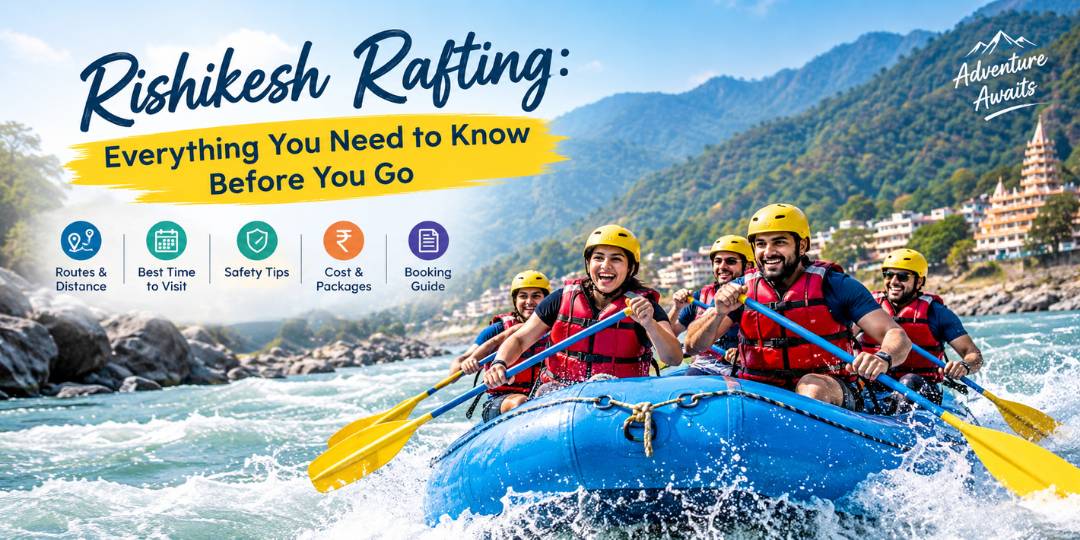
Rishikesh Rafting: Everything You Need to Know Before You Go
What if your next holiday could combine mountains, the Ganga, fresh air and a little adrenaline all in one experience? That is exactly why Rishikesh Rafting has become a popular choice for travelers looking for something more exciting than a regular sightseeing trip.
Rishikesh is known for its spiritual atmosphere, riverside views and Himalayan surroundings, but there is another side of the city that adventure lovers come to experience. The Ganga turns into a playground for white-water adventure, with different stretches offering varying levels of excitement.
Whether you are traveling with friends, planning a weekend getaway or trying rafting for the first time, knowing what to expect can make the experience much more enjoyable. From routes and distance to the best season, safety and booking tips, this guide covers the important things to know before Rishikesh rafting.
So, before you put on that life jacket and step into the raft, let’s understand how to plan your adventure properly.
Why Does This Adventure Feel So Different?
More Than Just a Boat Ride
A rafting trip is not simply about sitting in a boat and floating downstream. You paddle as a team, follow instructions from your guide and work together whenever the river gets rough.
The experience can change within minutes. One moment you may be enjoying a peaceful stretch surrounded by hills, and the next, the raft may be moving through exciting rapids.
For many travelers, this combination of teamwork, nature and adventure is what makes Rishikesh river rafting memorable.
A Perfect Break from Routine
Imagine leaving your phone in your bag, hearing rushing water instead of traffic and spending a few hours surrounded by mountains. That change of environment can make a short trip feel much longer.
It also fits easily into a weekend plan. You can combine rafting with cafés, riverside walks, temples, yoga experiences and other group adventure activities in Rishikesh.
Which Route Should You Choose?
Shorter Stretches for First-Timers
If you are new to rafting or simply want a relatively relaxed introduction, shorter stretches can be a practical option. These routes generally involve less time on the river and can be suitable for travelers who want to experience rafting without committing to a longer adventure.
Your operator can explain the current route conditions and whether a particular stretch is suitable for your group.
Longer Routes for More Adventure
Experienced travelers or people looking for a longer experience can consider stretches that cover more distance and include additional rapids.
The exact experience depends on river conditions, season and operational restrictions. This is why you should always ask the rafting operator about the current route before booking.
Understanding the different rafting routes is one of the most important parts of planning your trip. Do not choose a route only because someone online said it was exciting. Consider your experience level, comfort and the conditions on the day.
How Far Will You Actually Travel?
One common question travelers ask is about Rishikesh rafting distance. The answer depends on the route you choose. Different stretches begin and end at different points, so there is no single distance for every rafting experience.
Instead of focusing only on kilometres, ask about the total rafting duration, grade of rapids, starting point, ending point and transportation arrangements.
When Should You Plan Your Adventure?
Finding the Right Season
Wondering about the best time for Rishikesh rafting? The rafting season generally depends on river conditions, weather and local operating guidelines.
The months when rafting operations are active can offer different experiences. During warmer months, getting into the river can feel refreshing, while cooler periods may require extra preparation.
Monsoon conditions are particularly important because heavy rainfall can increase river flow and affect rafting operations. Operators may temporarily stop activities when conditions are considered unsuitable.
Check Conditions Before You Leave
Even if you have booked your trip in advance, check the latest operating information before travelling. Weather and river conditions can change, and the availability of particular routes may be affected.
A flexible itinerary is useful. If rafting is temporarily unavailable, you can explore other attractions around Rishikesh instead of letting one activity spoil your entire trip.
What Should You Know Before Getting Into the Raft?
Dress for the Experience
You do not need an expensive adventure wardrobe. Comfortable quick-drying clothes, secure footwear and minimal accessories are usually more practical.
Avoid carrying loose items that can easily fall into the river. Jewellery, expensive watches and unnecessary gadgets are better left at your accommodation.
Your operator should provide essential safety equipment such as a life jacket and helmet. Make sure your equipment fits properly before entering the water.
Listen to Your Guide
This is one of the most important things to know before Rishikesh rafting.
Your rafting guide is there to explain how to paddle, when to stop, how to position yourself and what to do during different situations. Listen carefully during the safety briefing, even if you have rafted before.
Do not try to show off or ignore instructions for a better photograph. The river is unpredictable, and following the guide’s instructions is more important than getting the perfect social-media moment.
Can Beginners Try It?
Yes, beginners can participate in suitable rafting experiences, provided they meet the operator's requirements and follow safety instructions.
If you have never tried rafting, tell the operator beforehand. They can help you understand which route may be appropriate based on your experience and current river conditions.
People with specific medical or physical concerns should seek appropriate professional advice before participating in strenuous adventure activities.
How Much Planning Does a Rafting Trip Need?
Book With a Reliable Operator
When looking at Rishikesh rafting booking options, do not compare providers only on price. Check what is included, where the rafting starts, transportation arrangements, safety equipment and cancellation or rescheduling conditions.
A very cheap option may not necessarily provide the experience you expect. Ask questions before making payment, especially if you are travelling with children or a large group.
Keep Your Schedule Flexible
Do not schedule another important activity immediately after rafting. Your trip may take longer than expected because of transportation, group coordination or changing river conditions.
A little extra time can make the day much more comfortable.
If you are planning a wider holiday, you can also explore Uttarakhand Tour Packages that combine Rishikesh with other destinations and experiences across the state.
What Else Can You Explore Around Rishikesh?
Turn One Activity Into a Full Trip
Rafting does not have to be the only highlight of your Rishikesh visit. The city offers a mix of spiritual, cultural and outdoor experiences.
You can explore the Ganga ghats, visit famous temples, enjoy cafés, experience yoga and meditation or simply spend some quiet time near the river.
Travelers interested in rafting in Uttarakhand can also use Rishikesh as a starting point for exploring other adventure destinations in the region.
Make It a Weekend Adventure
For people travelling from nearby cities, Rishikesh can work well as a short getaway. Leave early, enjoy rafting during the day and spend the evening exploring the town.
If you have more time, add another destination to your itinerary and turn a simple rafting trip into a broader Uttarakhand holiday.
Conclusion: Your Adventure Is Waiting
A trip to Rishikesh does not have to be limited to temples, cafés and peaceful riverside walks. If you want to add excitement to your itinerary, Ganga river rafting can turn an ordinary getaway into a memorable adventure.
The key is to plan sensibly. Choose a suitable route, check the current river and weather conditions, understand the Rishikesh rafting distance, wear appropriate clothing and listen carefully to your guide. Most importantly, choose a reliable operator instead of making your decision based only on price.
Whether you are travelling with friends, planning a weekend escape or experiencing rafting for the first time, Rishikesh offers an exciting way to experience the river and surrounding landscape.
Ready to plan your adventure? Explore suitable Uttarakhand Tour Packages with MaujiTrip, plan your Rishikesh itinerary and make your next trip more than just another vacation.
Frequently Asked Questions (FAQs)
1. Is Rishikesh rafting suitable for beginners?
Yes. Several rafting experiences can be suitable for beginners. However, the right route depends on river conditions, age requirements, physical ability and the operator's current recommendations.
2. What is the best time for Rishikesh rafting?
The best time for Rishikesh rafting depends on river conditions and local operating schedules. Always check current conditions and availability before travelling, especially around periods of heavy rainfall.
3. How much does Rishikesh rafting cost?
The price varies according to the route, duration, operator and inclusions. Shorter experiences generally cost less than longer routes. Check exactly what is included before booking.
4. How long does river rafting take?
The duration depends on the selected route and current conditions. The overall experience can also include transportation, safety instructions and preparation before entering the river.
5. What should I carry for rafting?
Carry comfortable clothes, secure footwear, sunscreen, water and a small number of essential personal items. Avoid carrying valuables or loose accessories on the raft.
6. Is rafting in the Ganga safe?
Rafting can be enjoyed safely when conducted under suitable conditions with proper equipment and trained guides. Always follow the safety briefing and your guide's instructions.
7. Can non-swimmers go rafting?
Swimming ability requirements can vary by operator and route. Since rafting involves safety considerations, non-swimmers should inform the operator beforehand and follow their guidance.