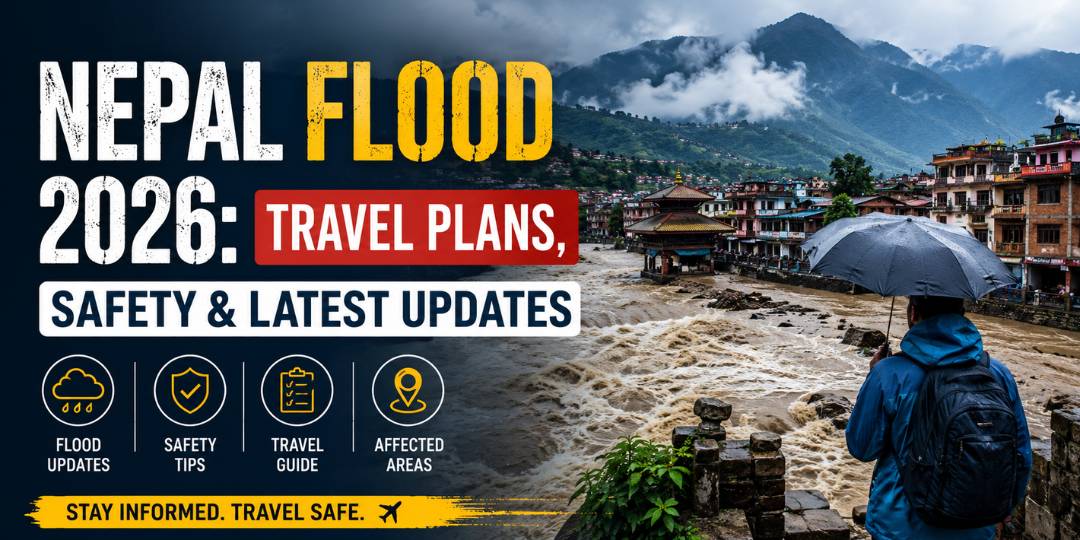
Nepal Flood 2026: Travel Plans, Safety & Latest Updates
Nepal Flood 2026 has changed the way many travellers are looking at their upcoming Nepal holidays. A destination known for Himalayan views, trekking routes, temples and peaceful mountain towns is currently dealing with the serious effects of flooding, landslides and damaged infrastructure in several areas. The situation became particularly severe after a major flash flood and mudslide struck the Rasuwa district near the Nepal-China border on August 26, affecting roads, bridges, communication networks and other infrastructure.
So, does this mean every Nepal trip should be cancelled? Not necessarily. The situation is different from one region to another, which is why travellers should avoid making decisions based only on social media posts or headlines.
If you already have tickets booked or are considering a Nepal holiday, this guide will help you understand the current situation, possible travel disruptions and the precautions worth taking. The key is simple: check the latest local information before you travel and remain flexible with your plans.
What Happened in Nepal?
The recent Nepal Flood 2026 situation is not simply a case of ordinary seasonal rain. A major flash-flood event affected the Rasuwa area near the China border, while heavy monsoon conditions have also increased the risk of flooding and landslides elsewhere. Authorities and international travel advisories continue to warn that conditions can change quickly.
A Disaster Beyond Heavy Rain
The August 26 disaster caused severe damage in and around Rasuwa. Roads and transport links were damaged, while some areas experienced interruptions to power, communications and essential services. Downstream districts have also faced impacts from flooding and landslides.
This is important for tourists because Nepal's popular attractions are often connected by mountain roads. Even when a destination itself is unaffected, the road leading there may become difficult or temporarily impossible to use.
Why the Monsoon Makes Things Difficult
Nepal monsoon travel can already involve unpredictable weather. June to September is generally the main monsoon period, and heavy rainfall can trigger flash floods and landslides that block roads or delay journeys. UK travel guidance specifically recommends checking whether roads are open and being prepared to change plans at short notice.
Think of it like planning a road trip where the destination is perfectly fine, but the route can change overnight. That is why flexibility matters more than ever.
Should You Change Your Nepal Trip?
One of the biggest questions travellers are asking is: Is Nepal safe to travel to right now? There is no single answer for the whole country. Safety depends heavily on your destination, route, travel dates and the latest local conditions.
Look Beyond the Headlines
The current situation is particularly serious in flood-affected areas. The U.S. travel advisory specifically says travellers should not go to the Rasuwagadhi-Timure-Syafrubesi area of Rasuwa because of flood damage, disrupted transport and communications, ongoing recovery work and the possibility of further flooding and landslides.
Australia has also advised travellers to reconsider travel within 50 kilometres of the Trishuli River in parts of Rasuwa, Nuwakot, Dhading, Gorkha and Nawalpur because of severe flooding, landslides and infrastructure damage.
Check Your Exact Route
Before deciding whether to cancel or continue your holiday, check your complete itinerary.
For example, a traveller flying into Kathmandu and staying in the city may face a very different situation from someone planning a remote trekking route or road journey through flood-affected mountain districts.
Instead of asking only, "Is Nepal safe?", ask:
- Is my destination affected?
- Is my road or trekking route open?
- Are flights operating normally?
- Are hotels accepting guests?
- Are local authorities recommending travel?
- Can I change my booking if conditions worsen?
These questions give you a much clearer picture.
Smart Ways to Travel During This Period
The current Nepal travel safety 2026 situation calls for extra planning. You do not necessarily need to give up every travel plan, but you should avoid treating this like a normal holiday season.
Keep Your Itinerary Flexible
If your trip is not urgent, consider choosing flexible flight and hotel bookings. A flexible ticket can be especially useful during unpredictable weather because road conditions, airport operations or local restrictions can change.
Avoid creating a tightly packed itinerary where one delayed journey ruins the entire holiday. Leave some extra time between major travel connections.
Stay Away From Risky Areas
During the Nepal Flood 2026 situation, travellers should stay away from flood-affected locations, riverbanks, damaged bridges and unstable slopes. Do not attempt to visit disaster zones simply to take photographs or see the damage.
Current official advice also warns travellers not to enter affected areas independently, especially where rescue and recovery operations are taking place.
If local authorities tell you to leave an area or avoid a route, follow that instruction immediately.
Carry the Basics
A little preparation can make a big difference during Nepal monsoon travel. Carry essential medicines, a power bank, some cash, drinking water and weather-appropriate clothing.
If you are travelling by road, keep extra time and basic emergency supplies available. UK guidance also recommends having enough equipment, medication and supplies to manage possible delays during the monsoon.
How to Plan Your Journey More Carefully
The recent Nepal flood news 2026 should not automatically stop people from learning about Nepal or planning future holidays. Nepal remains an important tourism destination, but travellers need to approach the current season responsibly.
Check Before Booking
If you have not purchased your tickets yet, research the latest conditions before confirming your trip. Check official weather information, local authorities, airport updates and travel advisories.
Do not rely on a blog post, Instagram reel or old YouTube video to make a safety decision. Weather-related situations can change within hours.
This is especially important if your itinerary includes remote mountain areas, trekking routes or long road journeys.
Have a Backup Plan
A backup plan does not mean expecting the worst. It simply means being prepared.
For example, if your original plan includes travelling by road to a remote destination, keep an alternative destination or extra stay in Kathmandu in mind. If a road becomes unavailable, you will not have to rebuild your entire holiday from scratch.
Travel insurance that covers relevant disruptions can also be worth considering. Read the policy carefully before purchasing it, particularly for weather-related cancellations, evacuation and trip interruption.
What Does This Mean for Nepal Tourism?
The Nepal tourism 2026 story is bigger than one flood event. Tourism supports hotels, restaurants, guides, drivers, trekking companies, local shops and many families across the country. A major disaster can affect these communities even when tourists are not directly involved.
Responsible Travel Matters
If authorities say an area is safe to visit, responsible tourism can help local businesses recover. Travellers can support local hotels, restaurants, guides and small businesses while respecting restrictions and avoiding affected zones.
But responsible travel never means putting yourself or rescue workers at risk. If an area is closed, wait until officials say it is safe.
Nepal Will Still Be There
Mountains, temples, cultural experiences and welcoming communities are a major part of Nepal's appeal. If your trip needs to be postponed, that does not mean the trip has to be cancelled forever.
The best approach to Nepal Flood 2026 is patience. Let recovery teams do their work, monitor conditions and choose your travel dates carefully.
Conclusion
The current Nepal Flood 2026 situation is a reminder that mountain travel requires flexibility, especially during the monsoon. The recent disaster has caused serious damage in parts of Nepal, and official advisories continue to warn travellers about specific affected areas and the possibility of further flooding and landslides.
At the same time, travellers should avoid assuming that conditions are identical across the entire country. Your destination, route and travel dates matter. Before booking or departing, check the latest updates, confirm that your route is open and keep a backup plan ready.
If you are planning a Nepal holiday, do not rush your decision based on headlines alone. Travel smart, respect local restrictions and give recovery efforts the space they need. When conditions are safe, Nepal's incredible landscapes and culture will still be waiting for you.
Planning your next trip? Check the latest travel conditions first, then book your flights and itinerary with flexibility in mind.
Frequently Asked Questions (FAQs)
Is Nepal safe to travel right now?
Is Nepal safe to travel depends on where you plan to go. Some areas are facing serious flood and landslide risks, particularly parts of Rasuwa and other affected districts. Travellers should check the latest official advice for their exact destination before departure.
What areas have been seriously affected?
The Rasuwa district and Nepal-China border area were among the hardest-hit locations following the August 26 disaster. Nuwakot, Dhading and Gorkha have also been affected, while travel advisories continue to warn about flooding and landslides in surrounding areas.
Is Kathmandu safe for tourists?
The situation in Kathmandu should not be judged solely by conditions in the flood-affected Rasuwa border area. However, travellers should still monitor weather, transport and official updates before and during their visit because monsoon conditions can cause disruptions elsewhere.
Should I cancel my Nepal trip?
Not automatically. If your itinerary passes through an affected or restricted area, postponing or changing the route may be the safer choice. If your destination and travel route remain open, continue monitoring conditions and keep your plans flexible.
Can monsoon affect road travel in Nepal?
Yes. Nepal monsoon travel can be affected by heavy rain, flash floods and landslides. Roads can become blocked, journeys can take longer and some communities can temporarily become difficult to reach.
Where should travellers check updates?
Use official Nepal government and local authority updates, weather and flood monitoring information, airport information and your country's travel advisory. Check these sources shortly before departure rather than relying on older travel content.