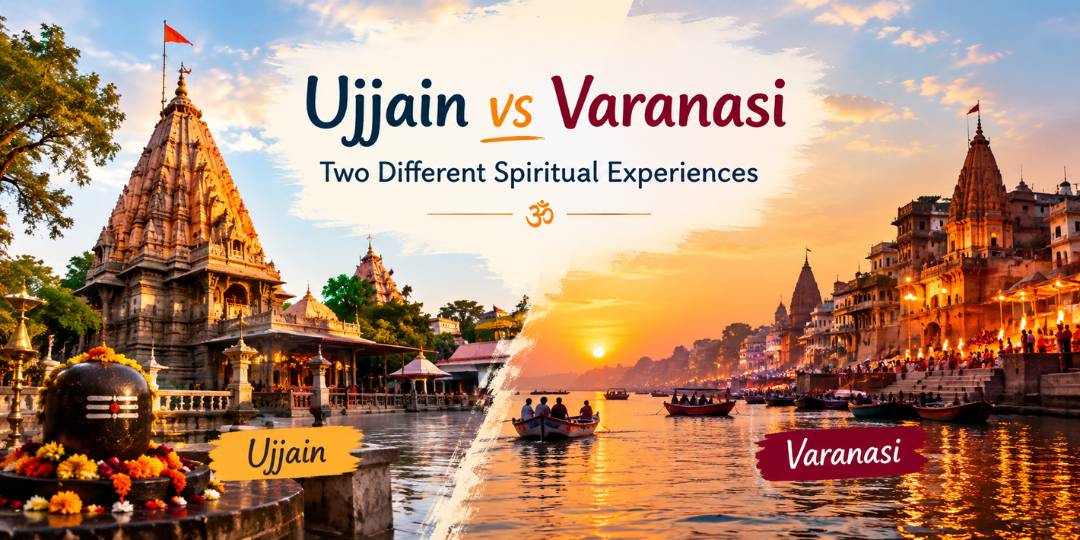
Ujjain vs Varanasi: Two Different Spiritual Experiences
What if two of India’s most famous spiritual cities could give you completely different travel experiences? That is exactly what makes Ujjain vs Varanasi an interesting comparison for anyone planning a spiritual getaway. Both cities have ancient roots, sacred temples, religious traditions, and a strong connection with Hindu culture. Yet, the atmosphere and experiences they offer are quite different.
Ujjain in Madhya Pradesh is strongly associated with Lord Shiva and the famous Mahakaleshwar Temple. Varanasi in Uttar Pradesh is built around the sacred Ganga and is known for its ancient ghats, temples, Ganga Aarti, and vibrant streets.
If you are searching for Ujjain vs Varanasi which is better, there is no one answer for every traveller. Your choice depends on whether you prefer a focused temple and pilgrimage experience or a wider journey combining spirituality, culture, food, history, and riverside experiences.
Let’s explore both destinations and see what makes each one special.
Two Sacred Cities with Very Different Vibes
Ujjain: Peace, Devotion and Shiva
Ujjain has a deeply spiritual atmosphere that can be felt throughout the city. For many visitors, the main reason to travel here is Mahakaleshwar Temple, one of the twelve Jyotirlingas dedicated to Lord Shiva.
The city is relatively easy to explore on a short trip. You can visit important temples, spend time beside the Shipra River, attend religious rituals, and explore the old parts of the city without needing a very long itinerary.
Following an Ujjain travel guide can help you plan your temple visits around opening hours and special rituals. Apart from Mahakaleshwar, you can visit Harsiddhi Temple, Kal Bhairav Temple, Mangalnath Temple, and Ram Ghat.
Ujjain is particularly appealing if your idea of travel is to slow down, pray, explore temples, and spend meaningful time with family or friends.
Varanasi: Life Along the Sacred River
Varanasi offers a different kind of spiritual experience. Here, the Ganga is at the centre of the city’s identity.
Walk along the ghats in the morning and you may see people praying, taking a holy dip, practising yoga, or simply watching the river. In the evening, the atmosphere changes as visitors gather for the famous Ganga Aarti.
A good Varanasi travel guide will usually include places such as Kashi Vishwanath Temple, Dashashwamedh Ghat, Assi Ghat, Manikarnika Ghat, and Sarnath.
Varanasi can feel crowded and energetic, but that is also part of its charm. Its narrow lanes, old buildings, local food, temples, markets, and riverfront create an experience that is difficult to find elsewhere.
The Temples That Shape the Journey
What Makes Ujjain Special
When looking at Ujjain vs Varanasi temples, Ujjain has a particularly strong temple-focused identity.
Mahakaleshwar Temple is the biggest attraction for many visitors. The temple is dedicated to Lord Shiva and attracts pilgrims from different parts of India throughout the year.
Harsiddhi Temple is another important religious site. Its distinctive lamp pillars create a memorable sight, particularly during evening prayers.
Kal Bhairav Temple is also popular and has a unique religious tradition. Mangalnath Temple, associated with Lord Shiva and traditional beliefs about Mars, is another place worth including in your itinerary.
These Ujjain temples make the city a strong choice for travellers who want to spend most of their trip exploring sacred places.
What Makes Varanasi Special
Varanasi's spiritual experience is spread across temples, ghats, rituals, and everyday life.
Kashi Vishwanath Temple is one of the city's most important religious attractions. Nearby ghats offer a completely different experience. Dashashwamedh Ghat is famous for the evening Ganga Aarti, while Assi Ghat is popular for its morning atmosphere and riverside setting.
The Varanasi temples are only one part of the experience. A boat ride on the Ganga, walking through the old lanes, enjoying local food, and watching life around the ghats can become equally memorable.
This is one of the biggest differences between the two cities: Ujjain can feel more temple-centred, while Varanasi combines temples with riverfront culture and everyday city life.
Beyond the Temples: Experiences You Will Remember
Things to Experience in Ujjain
There are plenty of things to do in Ujjain beyond visiting Mahakaleshwar.
Start your day early with a temple visit and then explore Ram Ghat along the Shipra River. You can visit Kal Bhairav Temple and Harsiddhi Temple before taking some time to explore other attractions.
History and astronomy enthusiasts can also visit Vedh Shala, an old observatory built during the period of Maharaja Jai Singh II.
One of the best ways to enjoy Ujjain is not to rush. Instead of trying to cover every attraction in one day, leave some time for sitting quietly near the river or enjoying the local atmosphere.
Things to Experience in Varanasi
There are many things to do in Varanasi, making it suitable for travellers who want more than a pilgrimage.
A sunrise boat ride on the Ganga is one of the most memorable experiences. Seeing the ghats slowly come alive as the sun rises can be peaceful and beautiful.
In the evening, attend the Ganga Aarti at Dashashwamedh Ghat. During the day, explore the narrow lanes, local markets, temples, and traditional food spots.
You can also take a short trip to Sarnath, which is historically important as the place where Buddha delivered his first sermon.
If you enjoy photography, history, food, architecture, and local culture, Varanasi gives you plenty to explore between temple visits.
Which City Matches Your Travel Style?
For a Short Spiritual Trip
If you only have one or two days, Ujjain can be easier to plan. The city’s major attractions can fit into a compact itinerary, especially if your main purpose is pilgrimage.
Varanasi can also be visited on a short trip, but there is much more to experience. You may find yourself wanting extra time for the ghats, boat ride, temples, food, and Sarnath.
For Families
When considering Ujjain vs Varanasi for family trip, think about the age and comfort of everyone travelling with you.
Ujjain can be convenient for families who want a focused religious journey. You can keep the schedule simple and avoid packing too many activities into one day.
Varanasi offers more variety, but some areas can be crowded and the old-city lanes involve considerable walking. Families travelling with children or older members may benefit from planning shorter sightseeing sessions and choosing accommodation carefully.
For Culture and Food Lovers
Varanasi has an advantage in terms of variety. Along with spirituality, visitors can experience Banarasi cuisine, traditional sweets, local markets, music, crafts, architecture, and life around the ghats.
Ujjain has its own local culture and food, but its overall travel experience is more strongly connected with pilgrimage and temples.
Planning the Trip Without the Stress
Best Way to Organise Your Days
Whichever destination you choose, avoid creating an itinerary that is too packed.
For Ujjain, you can dedicate the first part of the day to important temple visits and keep the evening for Ram Ghat and local sightseeing.
For Varanasi, consider an early morning boat ride, temple visits during the day, and Ganga Aarti in the evening. Keep some free time because walking through the old lanes can take longer than expected.
Also check temple timings and local travel conditions before your journey, particularly during major festivals when visitor numbers can increase significantly.
Booking Flights, Hotels and Packages
Planning everything separately can take time. Travellers who prefer a simpler arrangement can explore a Varanasi Tour Package that may combine accommodation, sightseeing, transfers, or other travel services depending on the package.
For Ujjain, you can similarly plan accommodation and transportation around your temple itinerary. Booking your hotel in a convenient location can save travel time and make early morning visits easier.
Before booking, compare what is included, hotel location, transportation, sightseeing coverage, and cancellation policies.
Ujjain or Varanasi: Which Experience Is Right for You?
The Ujjain vs Varanasi comparison is ultimately about the kind of journey you want.
Ujjain is a natural choice for travellers looking for a focused spiritual trip centred around Mahakaleshwar and other important temples. It works particularly well for a short pilgrimage or a peaceful family getaway.
Varanasi offers a broader experience. Along with temples, you get the Ganga, ancient ghats, evening Aarti, local food, historic streets, markets, and nearby attractions such as Sarnath.
So, instead of simply asking Ujjain vs Varanasi which is better, ask yourself what you want from the trip. Do you want a temple-focused journey or a combination of spirituality, culture, history, and riverside experiences?
And if your schedule allows, visiting both cities can give you two completely different perspectives on India's spiritual heritage.
Conclusion: Two Cities, Two Experiences
The beauty of Ujjain vs Varanasi is that neither destination needs to be exactly like the other. Ujjain offers a more focused spiritual experience, with Mahakaleshwar and its important temples at the heart of the journey. Varanasi brings spirituality into everyday life through the Ganga, ancient ghats, temples, rituals, food, and historic streets.
Your ideal destination depends on your travel style, available time, budget, and the people travelling with you. If you want a peaceful pilgrimage, Ujjain may fit naturally into your plan. If you want spirituality mixed with culture, history, food, and river experiences, Varanasi offers plenty to discover.
Why choose only one experience if your schedule allows both? Plan your route, book your stay, and explore these remarkable cities at your own pace.
Planning your next spiritual getaway? Explore flights, hotels, buses, and tour packages with MaujiTrip and start turning your travel plans into real experiences..
Frequently Asked Questions
Is Ujjain or Varanasi better for a spiritual trip?
Both offer strong spiritual experiences, but they have different atmospheres. Ujjain is particularly focused on Lord Shiva and temple visits, while Varanasi combines temples with the Ganga, ghats, rituals, and cultural experiences.
How many days are enough for Ujjain?
A two-day trip is generally enough to cover the major attractions in Ujjain at a comfortable pace. Travellers visiting mainly for pilgrimage may be able to cover the key places in even less time.
How many days are enough for Varanasi?
Three days can give you a good introduction to Varanasi. This allows time for important temples, ghats, a Ganga boat ride, Ganga Aarti, local sightseeing, and a visit to Sarnath.
Which city is better for a family trip?
For a Ujjain vs Varanasi for family trip comparison, Ujjain may suit families looking for a simpler and more focused pilgrimage. Varanasi offers more variety but can involve more walking and crowded areas.
What are the major temples to visit in Ujjain?
Mahakaleshwar Temple, Harsiddhi Temple, Kal Bhairav Temple, and Mangalnath Temple are among the important religious places commonly included in an Ujjain itinerary.
What are the famous places to visit in Varanasi?
Some major places to visit in Varanasi include Kashi Vishwanath Temple, Dashashwamedh Ghat, Assi Ghat, Manikarnika Ghat, and Sarnath.
Can I visit Ujjain and Varanasi on the same trip?
Yes. If you have enough time, combining both cities can be a great way to experience two different sides of India's spiritual and cultural heritage. Plan your transportation and accommodation in advance to make the journey smoother.